 Skip to main content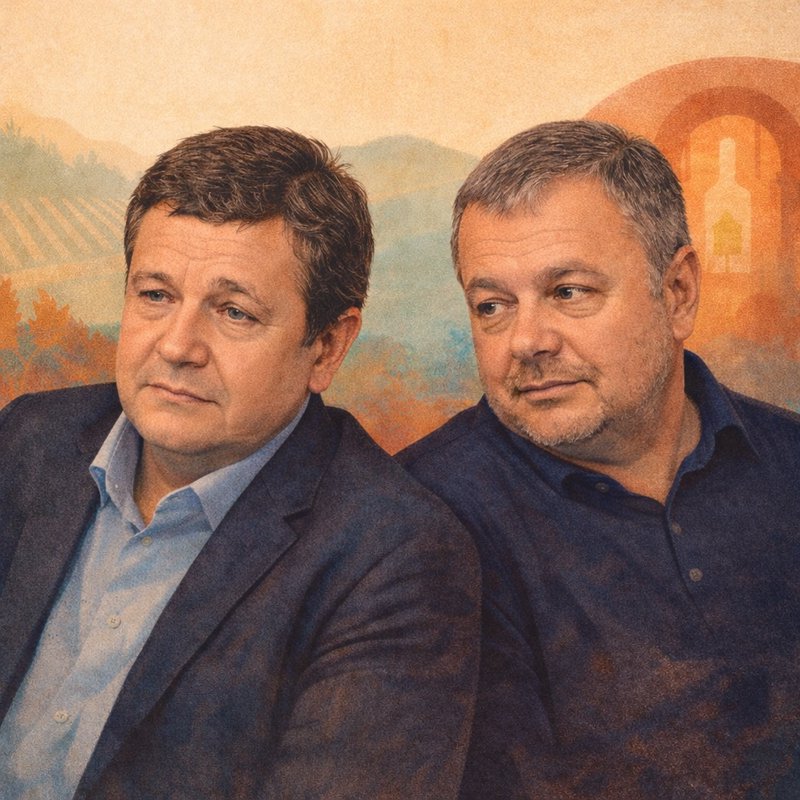
Valery Zadorin and Pavel Zadorin
Co-founders
Two brothers built Russia's first specialized wine chain to 1,014 stores in complete anonymity—no interviews, no public strategy. Valery's 2024 lawsuit demanding document access revealed what 26 years of silence had hidden: trust breakdown. Six months later they divided the business. Partnership ended, operations continue.
Transformation Arc
Valery Zadorin filed his first lawsuit against his brother Pavel in November 2024. By April 2025, the business they built together for 27 years had been carved in two.
This is a civilized way of resolving disagreements.
The Anonymous Moguls #
There are no photos of Valery or Pavel Zadorin at industry events. No conference keynotes. No LinkedIn profiles. No interviews explaining how two brothers from Kyrgyzstan built Russia’s largest specialized wine chain while remaining completely invisible. Until their lawsuit made headlines in 2025, the Zadorin brothers represented a vanishing breed: founders who scale to ₽50 billion in revenue without ever speaking publicly about strategy, motivation, or vision.
The invisibility was strategic, not accidental. Between 1996 and 2025, Russian business media published thousands of articles about retail consolidation, alcohol market evolution, and wine consumption trends. The Zadorin brothers appeared in none of them. Company milestones—130 stores in 2011, 500 stores in 2020, 1,000 stores in 2024—generated press coverage that quoted competitors, analysts, and industry experts. The founders offered no statements.
What little is known comes from corporate registries, court filings, and third-party observation. The brothers established TD Aroma as an alcohol import and wholesale business in Moscow in 1996. Allegations later surfaced linking Pavel Zadorin to Russia’s National Sports Fund, suggesting possible preferential import access during the privatization era, though no evidence confirmed direct involvement. What is documented: TD Aroma became a Top-10 wine importer in Russia, creating the supplier foundation for retail expansion.
The retail decision came two years later, in circumstances that defy easy explanation. On August 17, 1998, Russia defaulted on its domestic debt. The ruble collapsed, losing 70% of its value in weeks. Consumer confidence evaporated. Imported goods became luxury items overnight as prices denominated in dollars tripled in ruble terms. On October 11—just eight weeks after default—Valery and Pavel Zadorin opened their first Ароматный мир store at Beregovoy proezd in Moscow.
The timing suggests either extraordinary courage or exceptional financial cushioning from TD Aroma’s wholesale operations. Most retailers contracted during the crisis; the Zadorins expanded. They pioneered the “food and wine supermarket” format in Russia—specialized alcohol retail with trained sommeliers and curated selection rather than generic discount shelving. Until 2000, they operated as Moscow’s only specialized wine chain, capturing the entire emerging market for premium alcohol retail.
They never explained why they opened during crisis. They never discussed their retail thesis publicly. They simply executed.
Building in Silence #
The brothers’ division of labor remains undocumented, but court filings from the 2024-2025 conflict offer inference. Valery appears to have focused on retail operations while Pavel managed import and distribution through TD Aroma. The vertical integration model—controlling supply chain from import licensing through retail sales—became the company’s competitive moat against discount chains like Красное и Белое, which launched in 2006 and eventually scaled to 6,100+ stores through aggressive price competition.
Ароматный мир competed on differentiation rather than volume. Staff training produced sommeliers and cavistes. Store format averaged 70 square meters—small enough for neighborhood convenience, large enough for selection. Approximately 16,000 SKUs included 670 wines, 539 food items, and 511 spirits. The АМ Коллекция exclusive import line offered products unavailable through competing retailers. Seventy percent of inventory came through TD Aroma, eliminating intermediary markup and maintaining margin advantage over chains dependent on third-party distributors.
The strategy worked because the brothers understood Russian wine retail before it existed. They built the category rather than entering an established market. By 2006, when KOMKON research ranked Ароматный мир among Moscow’s top 10 most recognized retail chains, competitors faced not just operational advantages but heritage positioning: Russia’s original wine retailer. Superbrands International awarded “Супербренд” status in 2004 and again in 2007. The Товар года diploma for Best Specialized Retail Chain arrived in 2001. The recognition accumulated while the founders remained anonymous.
Growth proceeded methodically. Six stores by 2000. Forty stores by 2005. 130+ stores with 700+ employees by 2011. The pace suggested disciplined execution rather than venture-backed hypergrowth. No external investors appeared in corporate registries. No private equity ownership emerged. The brothers retained complete control through TD Aroma and affiliated entities, self-funding expansion through retail margins and import profits.
The model faced its first major external crisis in December 2014. Black Monday hit Russian markets; the ruble crashed to 64 RUB/USD. Wine prices increased 19.3% in 2015 as imported products repriced to reflect currency devaluation. Competitors contracted. Ароматный мир continued opening stores, reaching 500 locations by October 2020. The vertical integration cushioned external shocks: TD Aroma could adjust import sourcing and pricing internally rather than negotiating with third-party suppliers during market chaos.
The 2022 sanctions wave created different pressure. Western wine brands exited Russia entirely as geopolitical conflict disrupted traditional supply chains. TD Aroma’s import revenue dropped 18.5% as suppliers disappeared. Yet retail operations grew 20% as the company pivoted sourcing toward domestic Russian wines—which had grown from niche category to 60%+ of market post-sanctions—and alternative import origins. The brothers demonstrated crisis adaptation without public commentary. Sales continued. Stores opened. The silence persisted.
By October 2024, the network reached 1,014 stores, making Ароматный мир the fourth Russian retail chain to achieve 1,000+ locations. Total group revenue approached ₽50 billion annually. The brothers had built Russia’s wine retail category, scaled to federal presence across 22+ cities, survived two currency crashes and international sanctions, and maintained complete operational control for 27 years without explaining their strategy to anyone outside the business.
Then Valery sued Pavel.
The Fracture #
On November 1, 2024, Valery Zadorin filed a lawsuit against АМ Ритейл—the retail operating company—demanding access to corporate documents. The filing represented the first public evidence of conflict between brothers who had operated in silent partnership since 1996. The lawsuit’s substance suggested something more serious than routine corporate governance: Valery claimed he was being excluded from management information, indicating breakdown in trust and communication.
For 26 years, the brothers had maintained unified control. Now one brother was suing the company they jointly owned to obtain documents he should have accessed automatically. The litigation implied exclusion, possibly deliberate. In February 2025, Valery filed a second lawsuit directly against Pavel, seeking to invalidate an undisclosed transaction between them. The escalation moved from corporate governance dispute to personal conflict between founders.
The business implications emerged in March. On February 28, the company’s mobile app developer ceased operations due to non-payment dating to fall 2024. On March 1, customers opening the Ароматный мир app encountered a message stating “All stores have ceased operations” with automatic redirect to competitor ВинЛаб. The message was false—physical stores remained open—but for 48 hours the company’s digital infrastructure was effectively hijacked. The website crashed. The app went offline. Loyalty cards stopped working. The company couldn’t communicate with its own customer base.
Russian business media reported the chaos in real-time. Kommersant, Vedomosti, and RBC covered the digital collapse as evidence of operational breakdown at ownership level. Service providers weren’t being paid. Digital assets weren’t being controlled. A ₽22 billion company couldn’t access its own customer-facing systems. The crisis exposed what 27 years of silence had hidden: internal dysfunction severe enough to paralyze operations.
Reports surfaced that Alexey Mordashov’s Severgroup—owner of Lenta hypermarket chain—had expressed interest in acquiring the company. The speculation suggested the conflict might force a sale to external buyers, ending family ownership entirely. On March 5, a company spokesperson issued the brothers’ only public statement about the crisis: “This is a civilized way of resolving disagreements.”
The resolution came through division rather than reconciliation. In early April 2025, Valery withdrew both lawsuits. On April 4, Pavel Zadorin exited АМ Ритейл’s capital entirely, leaving Valery with 95% ownership of retail operations. Pavel retained 100% control of TD Aroma’s import and distribution business. The brothers remained co-owners only of Terminal Selyatino, an 18,000-square-meter customs bonded warehouse.
The business they built together no longer existed as unified entity. Retail and import—integrated for 27 years—now functioned as separate companies with aligned commercial interests but independent strategic control. Valery could pursue retail expansion, franchise partnerships, and format innovation without negotiating with his brother. Pavel could develop TD Aroma’s import business, potentially serving competing retail chains, without sibling conflict.
The company denied plans to sell. Operations continued without interruption at physical store level. Digital systems were restored within days through new service provider contracts. Customer loyalty programs resumed function. The March chaos proved temporary, but the ownership split appeared permanent.
The Aftermath #
In August 2025, four months after the division, Ароматный мир launched a new visual identity and slogan: “Наполняем настроение вкусом” (“We fill the mood with taste”). The rebrand signaled Valery’s independent strategic direction for retail operations, moving from heritage positioning toward lifestyle and experience framing. The company resumed its franchise program, targeting 200 partner stores by 2027 to accelerate growth beyond company-owned locations. In January 2026, АМ Кулинария opened—a hybrid café-store format testing whether wine retail could expand into hospitality.
Pavel’s path forward remains undocumented. TD Aroma continues operating as Russia’s Top-10 wine importer, but strategic plans—whether serving competing retailers, consolidating import operations, or pursuing independent growth—remain as invisible as the brothers always preferred. The silence that characterized the partnership now characterizes the separation.
The litigation revealed no “Am I delusional?” moment—no documented crisis of founder doubt or consideration of quitting. What the court filings exposed was simpler and more fundamental: trust breakdown between partners who built together for 26 years. Valery’s demand for document access suggested exclusion from decisions. His lawsuit seeking to invalidate a transaction suggested disagreement on business direction. The March digital collapse suggested operational chaos born from management paralysis at the top.
Whether the conflict stemmed from strategic disagreement, personal grievance, succession planning debate, or accumulated resentment remains unknown. The brothers offered no statements. No interviews explained their perspectives. The invisibility that defined the partnership extended through its dissolution.
The Lesson in Division #
The Zadorin brothers demonstrate that founder anonymity can sustain business scale for decades. Their refusal to participate in industry publicity, media engagement, or strategic communications cost them nothing measurable—the company grew to 1,000+ stores and ₽50 billion revenue without founder visibility. Silent execution proved sufficient. The market rewarded results; it didn’t demand explanations.
But invisibility cannot prevent internal conflict from becoming public when litigation forces disclosure. The November 2024 lawsuit made private dysfunction visible. The March 2025 digital collapse made operational consequences tangible. The April 2025 business division made separation permanent. The brothers who introduced Russia to specialized wine retail did so while maintaining complete anonymity—until they couldn’t maintain partnership.
The resolution through business division rather than forced sale preserved operational continuity while ending partnership. Valery pursues retail evolution independently. Pavel retains import operations autonomously. The vertical integration that created competitive advantage for 27 years now operates as commercial relationship between separate entities. Whether this structure proves more resilient or simply delays inevitable further separation remains to be determined.
For founders building in silence, the Zadorin case offers both validation and warning. Execution matters more than publicity. Results matter more than founder persona. A business can scale to ₽50 billion without media presence. But when partnership fractures, silence offers no protection. Internal conflict becomes external spectacle. Operations survive through structure, not through brotherhood. The empire built together can be divided without collapse—but it cannot remain unified when trust breaks.
Valery holds retail. Pavel holds import. Both paths continue. The partnership ended, but the businesses they created persist independently. Whether this represents succession planning or partnership failure depends entirely on what each brother builds next.