 Skip to main content
Where the Wave Breaks — Data Companion
Intelligence Whitepaper № 4 — Data CompanionThe lattice framework in Where the Wave Breaks rests on five appendices: sector presence across 38 countries, wave shape classifications with urgency ratings, signal co-occurrence patterns, named acquirer transactions, and documented brand counts by market. This companion provides the full corpus mapping.
This document contains the data tables referenced in Where the Wave Breaks. It is intended for institutional readers who wish to interrogate the underlying corpus.
Appendix a: Sector presence by country — top 8 sectors × 38 markets
Presence indicated: ✓ = confirmed cohort; ◐ = partial/emerging cohort; — = not confirmed in corpus. Signal status where available; otherwise research confirmation. Full 47-sector taxonomy available in Brandmine Intelligence Platform. For market coverage depth and documented brand count ranges by market, see Appendix E.
| Country | Natural Beauty | Food Processing | Boutique Hospitality | Confectionery | Tea & Coffee | Fashion & Accessories | Textiles & Heritage Craft | Wine & Spirits |
|---|---|---|---|---|---|---|---|---|
| Russia | ✓ | ✓ | ✓ | ✓ | ◐ | ✓ | ◐ | ✓ |
| China | ✓ | ✓ | ✓ | ◐ | ✓ | ✓ | ✓ | ◐ |
| India | ✓ | ✓ | ✓ | ✓ | ✓ | ✓ | ✓ | — |
| Indonesia | ✓ | ✓ | ✓ | ◐ | ✓ | ✓ | ✓ | — |
| Brazil | ✓ | ✓ | ✓ | ✓ | ✓ | ✓ | ◐ | ◐ |
| Argentina | ✓ | ✓ | ✓ | ✓ | — | ✓ | — | ✓ |
| Thailand | ✓ | ✓ | ✓ | ◐ | ✓ | ✓ | ✓ | — |
| Vietnam | ✓ | ✓ | ✓ | ◐ | ✓ | ✓ | ✓ | — |
| Malaysia | ✓ | ✓ | ✓ | ◐ | ✓ | ✓ | ✓ | — |
| Bangladesh | — | ✓ | ◐ | — | ◐ | ✓ | ✓ | — |
| Pakistan | ◐ | ✓ | ◐ | ✓ | ✓ | ✓ | ✓ | — |
| Egypt | ✓ | ✓ | ✓ | ✓ | ✓ | ✓ | ✓ | — |
| Turkey | ✓ | ✓ | ✓ | ✓ | ✓ | ✓ | ✓ | ✓ |
| Kazakhstan | ✓ | ✓ | ◐ | ✓ | ◐ | ◐ | ◐ | — |
| Georgia | ✓ | ✓ | ✓ | ◐ | ✓ | — | ◐ | ✓ |
| Ukraine | ✓ | ✓ | ◐ | ✓ | — | ✓ | ◐ | ✓ |
| Morocco | ✓ | ✓ | ✓ | ◐ | ✓ | ✓ | ✓ | — |
| South Africa | ✓ | ✓ | ✓ | ◐ | ✓ | ✓ | ◐ | ✓ |
| Nigeria | ◐ | ✓ | ✓ | ✓ | ✓ | ✓ | ✓ | — |
| Kenya | ✓ | ✓ | ✓ | ◐ | ✓ | ◐ | ✓ | — |
| Ethiopia | ✓ | ✓ | ◐ | — | ✓ | — | ✓ | — |
| Tanzania | — | ✓ | ✓ | — | ✓ | — | ✓ | — |
| Chile | ✓ | ✓ | ✓ | ◐ | — | ✓ | — | ✓ |
| Peru | ✓ | ✓ | ✓ | ◐ | ✓ | ✓ | ✓ | ◐ |
| Colombia | ✓ | ✓ | ✓ | ◐ | ✓ | ✓ | ✓ | — |
| Mexico | ✓ | ✓ | ✓ | ✓ | ◐ | ✓ | ✓ | ◐ |
| Philippines | ✓ | ✓ | ✓ | ✓ | ✓ | ✓ | ✓ | — |
| Sri Lanka | ✓ | ✓ | ✓ | ◐ | ✓ | ◐ | ✓ | — |
| Myanmar | — | ✓ | ✓ | — | ✓ | — | ✓ | — |
| Cambodia | — | ✓ | ✓ | — | ✓ | — | ✓ | — |
| Nepal | ✓ | ✓ | ✓ | — | ✓ | — | ✓ | — |
| Azerbaijan | ✓ | ✓ | ◐ | ✓ | — | — | ✓ | ✓ |
| Uzbekistan | ◐ | ✓ | ◐ | ✓ | — | ✓ | ✓ | — |
| Mongolia | ◐ | ✓ | ◐ | — | — | ◐ | ✓ | — |
| Iran | ✓ | ✓ | — | ✓ | ✓ | ✓ | ✓ | — |
| Algeria | ◐ | ✓ | ◐ | ◐ | — | ✓ | ✓ | — |
| Ghana | — | ✓ | ✓ | ✓ | ✓ | ✓ | ✓ | — |
| Senegal | — | ✓ | ✓ | — | ✓ | ✓ | ✓ | — |
| Sector total (✓ only) | 22 | 18 | 17 | 16 | 16 | 15 | 10 | 8 |
Sector totals reflect confirmed cohort presence (✓) only, consistent with the sector-frequency analysis in the research corpus. Partial/emerging cohort markets (◐) are not counted in totals. Counts for the Universal Six sectors (Natural Beauty through Fashion & Accessories) match the frequency rankings used throughout this paper. Textiles & Heritage Craft and Wine & Spirits are included for corridor illustration; their counts reflect the same ✓-only methodology. Full sector frequency data across all 47 tracked sectors is available in the Brandmine Intelligence Platform.
Appendix B: Wave shape classification — all 38 markets
Classification based on primary founding event and cohort concentration. Urgency: High = transition window open now; Medium = 3–7 years; Low = 7–15 years; Watch = pre-cohort or incomplete documentation.
| Country | Wave Shape | Primary Founding Event | Approx. Cohort Peak | Urgency |
|---|---|---|---|---|
| Russia | 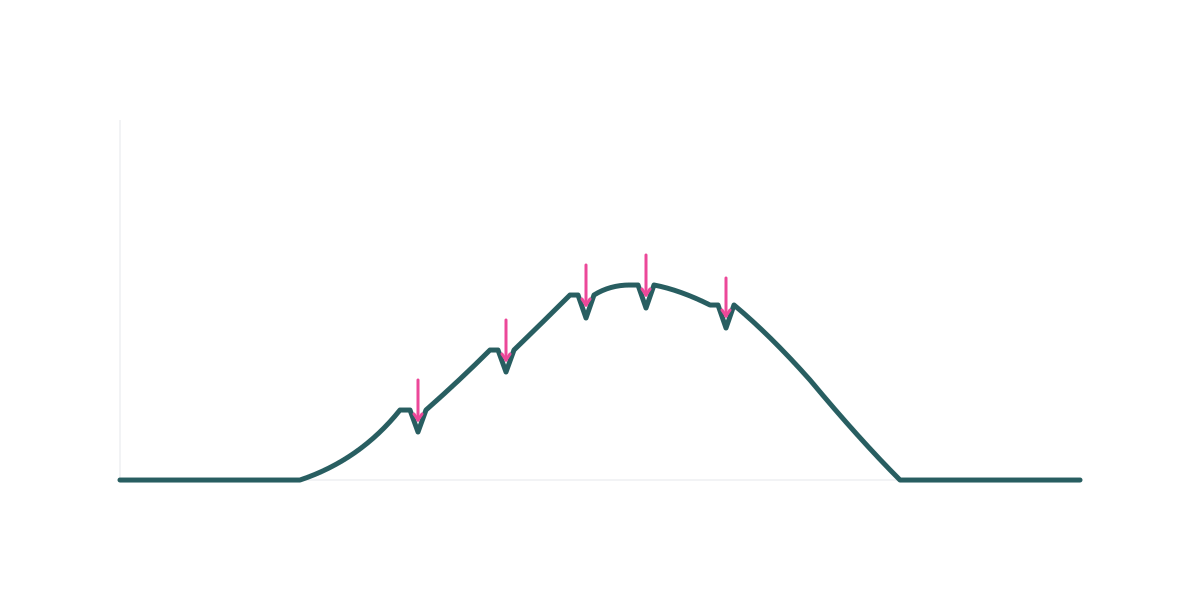 Five-Crisis Compressed Five-Crisis Compressed | 1991 market liberalization + five macro shocks 1998–2022 | 1991–2000; overdue | High |
| China | 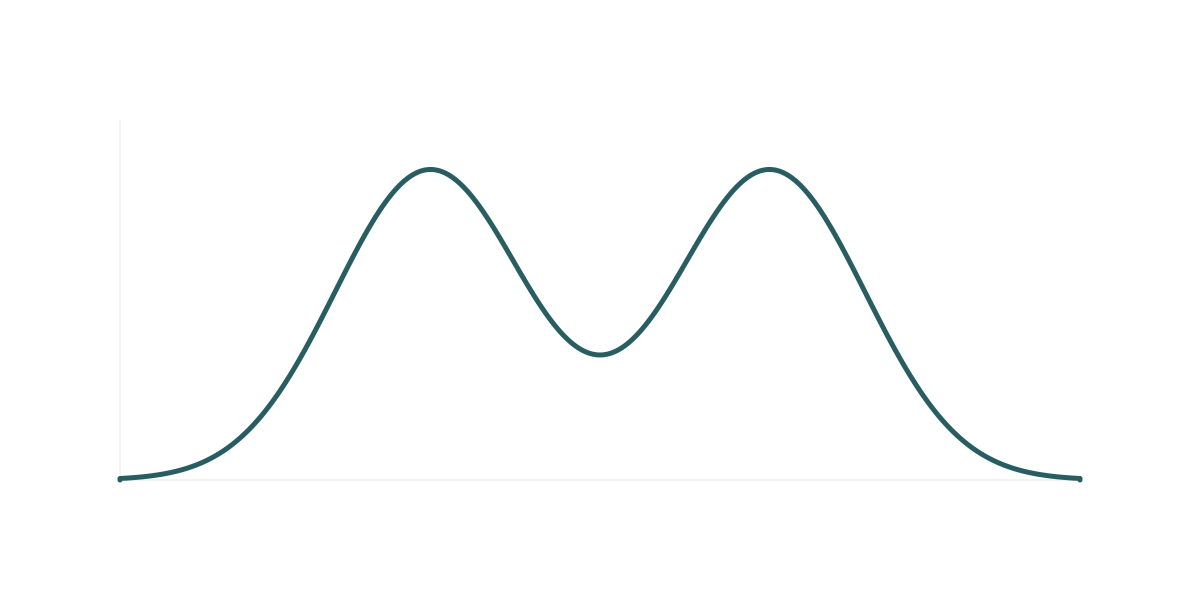 Double Wave Double Wave | Wave 1: 1978–1992 state reform; Wave 2: 1992–2001 下海 generation | Wave 1: now; Wave 2: 2030s | High (W1) / Medium (W2) |
| India | Double Wave | Wave 1: 1991 liberalization; Wave 2: 2000–2010 digital/consumer boom | Wave 1: now; Wave 2: 2030s | High (W1) / Medium (W2) |
| Indonesia | 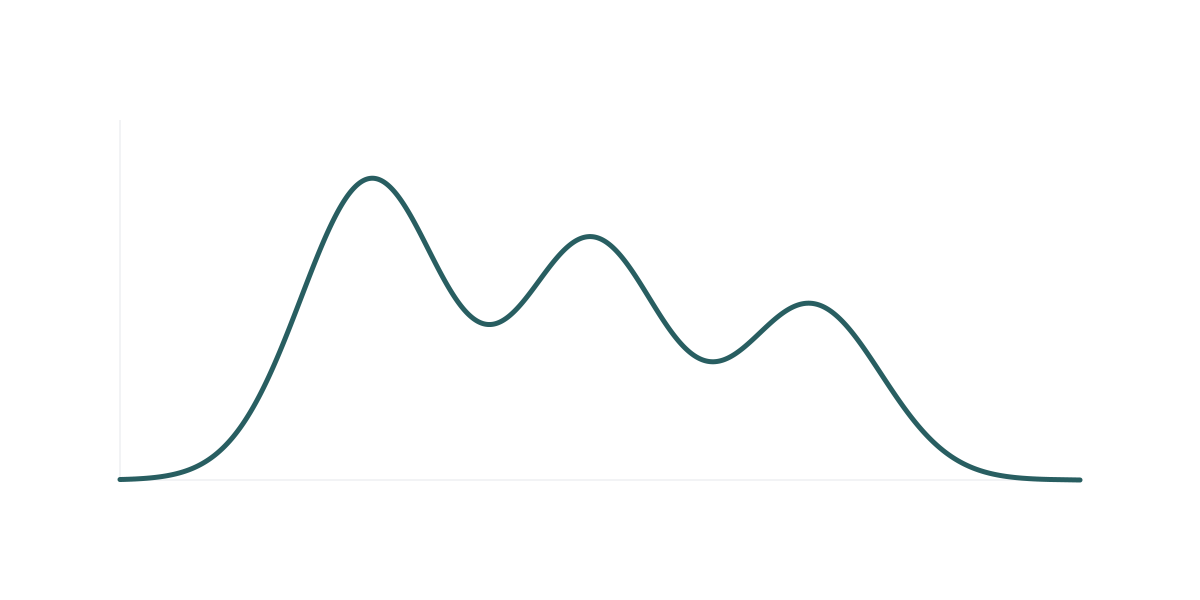 Layered Wave Layered Wave | New Order 1980s → Reformasi 1998 → Halal regime 2014–2026 | Layer 1: now; Layer 2: 2028–2033 | High (Layer 1+2 converging) |
| Bangladesh | 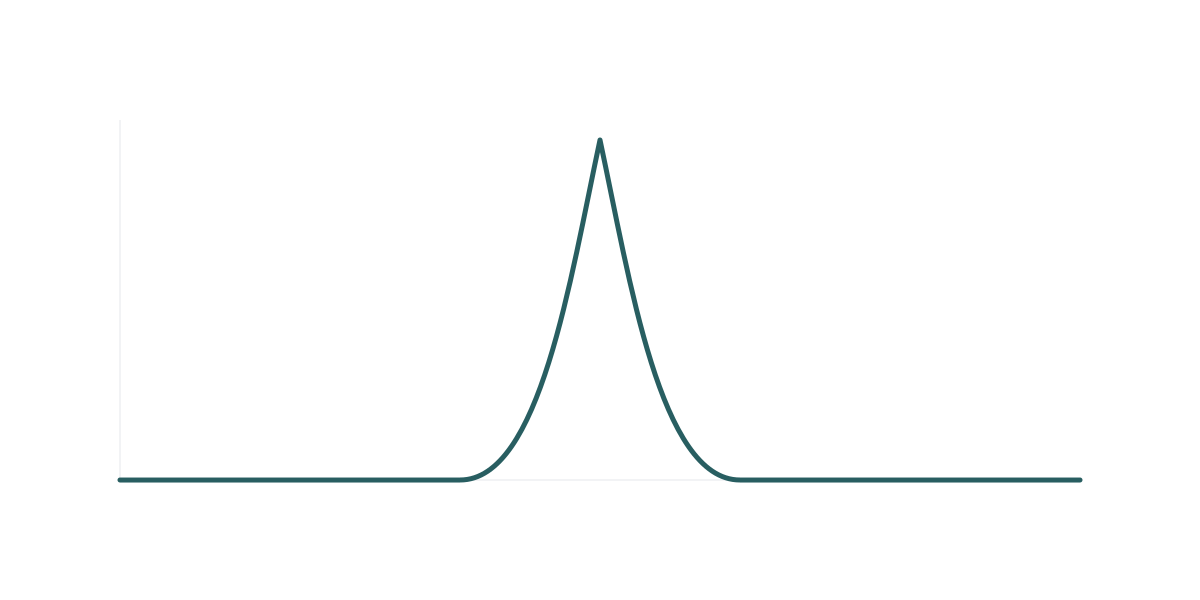 Compressed Wave Compressed Wave | Garment export boom 1980–1985 | Now — LDC deadline accelerating | High |
| Mongolia | Compressed Wave | Democratic revolution / market opening 1990–1992 | Now | High |
| Turkey | Double Wave | Anatolian Tigers 1980s → AKP expansion 2003–2013 | Wave 1: now; Wave 2: 2030s | High (W1) / Medium (W2) |
| Argentina | Layered Wave | Menem-era expansion 1990s → post-2001 crisis founders | Layer 1: now + distress event 2025 | High |
| Thailand | 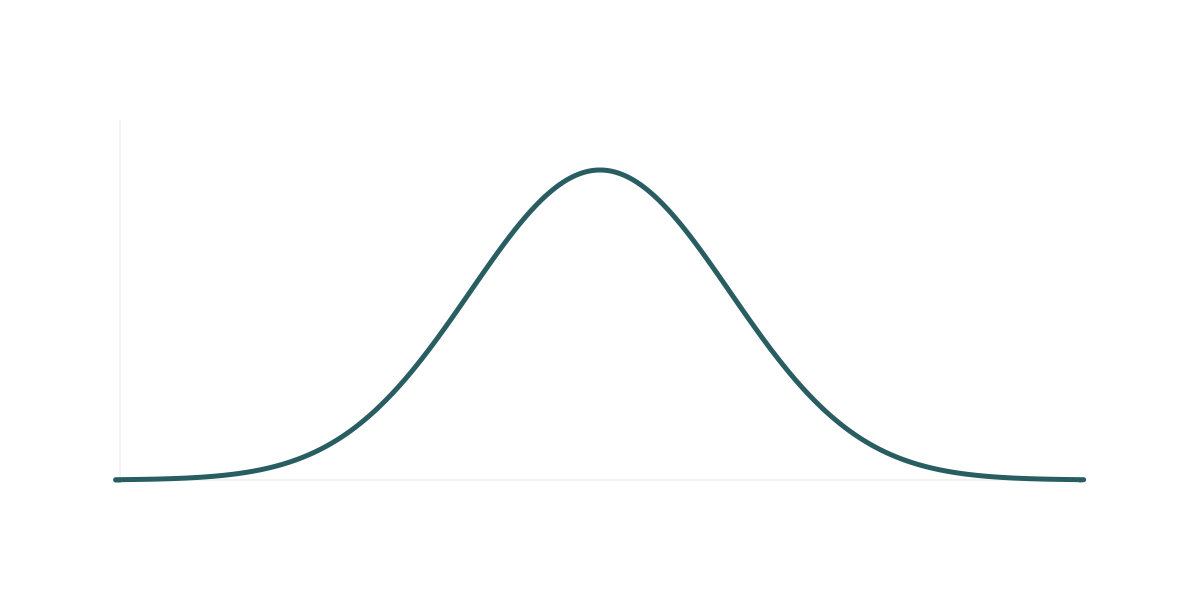 Standard Wave Standard Wave | 1997 crisis recovery cohort; 2000s expansion | Now | High |
| Brazil | Standard Wave | Real Plan stabilization 1994–2000 | Now | High |
| South Africa | Layered Wave | Post-apartheid 1994 → BEE 2003+ → digital 2015+ | Layer 1: now; layers 2–3: medium | Medium |
| Vietnam | Standard Wave | Đổi Mới reform 1986–1995 | Now | High |
| Malaysia | Standard Wave | Industrial policy expansion 1990s | Now | Medium |
| Kazakhstan | Standard Wave | Independence + market opening 1991–1998 | Now | Medium |
| Georgia | Standard Wave | Rose Revolution / market reform 2003–2008 | Now | Medium |
| Colombia | Standard Wave | Peace process + economic opening 2000s | Now | Medium |
| Peru | Standard Wave | Toledo-era growth 2001–2011 | Now | High |
| Chile | Standard Wave | Post-Pinochet consolidation 1990s | Now | Medium |
| Mexico | Standard Wave | NAFTA-era expansion 1994–2006 | Now | Medium |
| Egypt | Standard Wave | Infitah expansion + private sector opening 1990s–2000s | Now | Medium |
| Morocco | Standard Wave | 2000s modernization + tourism build | Now–2030 | Medium |
| Nigeria | Standard Wave | Oil-boom and diversification 2000s | Now | Medium |
| Kenya | Standard Wave | Post-2008 recovery + tech-hub expansion | Now | Medium |
| Ethiopia | Standard Wave | Post-EPRDF economic opening 2010s | Now | Medium |
| Philippines | Standard Wave | Aquino-era consumer expansion 2010–2016 | Now | Medium |
| Sri Lanka | Standard Wave | Post-war reconstruction 2009–2015 | Now | Medium |
| Ukraine | 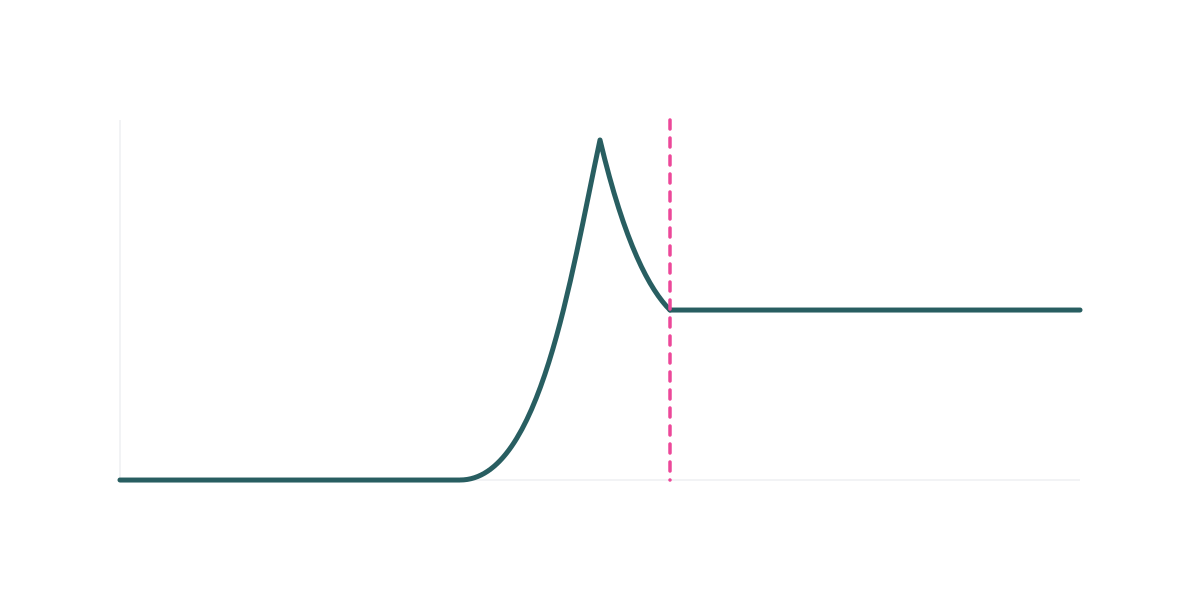 Compressed Wave (disrupted) Compressed Wave (disrupted) | Post-independence 1991–1998; disrupted by 2022 | Suspended | Watch |
| Pakistan | Standard Wave | Musharraf-era growth 2000–2008 | Now | Medium |
| Azerbaijan | Standard Wave | Oil-revenue diversification 2000s | Now | Medium |
| Uzbekistan | Standard Wave | Post-Karimov opening 2016+ | 2028–2035 | Low |
| Iran | Standard Wave | Limited domestic private enterprise opening | Now | Watch |
| Algeria | Standard Wave | Post-civil war stabilization 2000s | Now | Watch |
| Ghana | Standard Wave | Democratic consolidation + cocoa economy 2000s | Now | Medium |
| Senegal | Standard Wave | Teranga economy + Francophone cultural export | Now | Low |
| Tanzania | Standard Wave | Liberalization 1990s + Zanzibar tourism | Now | Low |
| Myanmar | Compressed Wave (disrupted) | Thein Sein opening 2011–2015; disrupted by 2021 coup | Suspended | Watch |
| Cambodia | Standard Wave | Post-UNTAC reconstruction 1993–2000 | Now | Low |
| Nepal | Standard Wave | Post-civil war stabilization 2006+ | Now | Low |
Appendix C: Signal frequency and Co-occurrence by sector
Growth signal distribution across documented corpus, by sector. Signals: export-ready (E), investment-ready (I), scale-ready (S), succession-ready (SR). Frequency reflects signal patterns observed in documented brand-level cases; it does not represent a census of all brands in each sector. Sectors without corpus evidence are not included.
| Sector | Export-Ready | Investment-Ready | Scale-Ready | Succession-Ready | Notes |
|---|---|---|---|---|---|
| Natural Beauty | High | High | Medium | High | Succession-ready most critical signal; governance gap primary risk |
| Food Processing | High | Medium | High | Medium | Export-ready strongest signal; LDC/halal deadlines amplify |
| Boutique Hospitality | Low | High | Low | High | Investment-ready and succession-ready co-present in high-value cases |
| Confectionery | Medium | Medium | Medium | High | Terroir brands cluster investment-ready + succession-ready |
| Tea & Coffee | High | Medium | Low | Medium | Export-ready dominant; scale-ready limited by origin-size constraint |
| Fashion & Accessories | Medium | Low | Medium | High | Succession-ready elevated; governance opacity most common barrier |
| Textiles & Heritage Craft | Medium | Low | Low | Medium | Export-ready building; investment-ready rare without brand equity |
| Wine & Spirits | High | Medium | Medium | High | All four signals present in developed market anchors (Argentina, Russia, Georgia) |
| Halal Foods | Medium | High | Medium | Medium | Investment-ready elevated by certification legibility event |
| Herbal & Traditional Medicine | Low | High | Low | High | Investment-ready driven by wellness-premium exit comparables |
| Fermented Dairy | Low | High | Medium | High | Investment-ready strongest; perception gap = undervaluation signal |
| Honey & Bee Products | Medium | Low | Low | Low | Export-ready building (Kazakhstan); investment-ready pre-institutional |
| Pharmacy & Health Retail | Low | High | High | High | Scale-ready + succession-ready co-present; consolidation thesis |
| Mineral Waters | High | Medium | Medium | High | Export-ready + succession-ready dominant in Caucasus corridor |
Signal definitions per Brandmine methodology: Export-ready = demonstrated international market access or documented readiness. Investment-ready = structural positioning for institutional capital (governance, documentation, scale). Scale-ready = operational infrastructure capable of supporting significant growth. Succession-ready = documented succession pressure without resolved transition plan. Full signal definitions in Beyond the Financials (WP2).
Signal co-occurrence patterns across documented corpus. The table below shows which signal combinations appear most frequently in documented brands, across all sectors and markets. Co-occurrence frequency reflects observed patterns in the corpus; it does not imply that every brand in a given category carries all listed signals.
| Signal Combination | Frequency in Corpus | Primary Sectors | Investor Implication |
|---|---|---|---|
| Succession-ready only | Common | Fashion, Confectionery, Food Processing | Transition pressure without institutional readiness; early positioning required |
| Investment-ready + Succession-ready | Common | Natural Beauty, Boutique Hospitality, Herbal Medicine, Fermented Dairy | Core NDD target profile: governance capable, transition imminent |
| Export-ready + Succession-ready | Moderate | Wine & Spirits, Tea & Coffee, Mineral Waters | Origin-branded with transition pressure; acquirer interest likely before founder acts |
| Export-ready + Investment-ready | Moderate | Natural Beauty, Food Processing, Halal Foods | Institutionally legible and internationally oriented; closest to transaction-ready |
| All four signals co-present | Uncommon | Wine & Spirits (developed anchors), Natural Beauty (Russia, Indonesia) | Highest-conviction targets; also highest competition for assets |
| Scale-ready + Succession-ready | Moderate | Pharmacy & Health Retail, Food Processing | Consolidation thesis: infrastructure exists, transition creates entry |
| Export-ready only | Common | Tea & Coffee (origin producers), Honey & Bee Products | Export orientation established; investment-readiness and succession signals not yet triggered |
Co-occurrence frequency definitions: Common = observed in more than 30% of documented brands in relevant sectors; Moderate = 15–30%; Uncommon = fewer than 15%. These are indicative ranges based on corpus patterns, not statistically derived thresholds.
Revenue band distribution — documented brands, all markets. The corpus skews toward sub-institutional scale, which is consistent with the thesis: these are brands that have not yet been reached by conventional financial intelligence platforms. Approximate distribution across all documented brands meeting the inclusion criteria:
| Revenue Band | Estimated Share of Documented Brands | Notes |
|---|---|---|
| Under $1M | ~15% | Primarily frontier markets and early-stage niche sectors; included where founder documentation is strong |
| $1M–$10M | ~40% | Core of the corpus; established local brands with regional distribution |
| $10M–$50M | ~30% | Primary acquisition target range for most investor profiles |
| $50M–$200M | ~12% | Larger cohort members; often have some institutional contact history |
| Over $200M | ~3% | Exceptional cases (Gloria Jeans, Xibei, Paragon); included for wave-shape and NDD illustration |
Revenue estimates are derived from trade press, regulatory filings, and industry benchmarks where available; a significant portion of documented brands do not publish financials, and estimates carry wide error margins. These figures are directional, not audited. The skew toward sub-$10M brands reflects the pre-visibility nature of the corpus — these are brands that have not yet been reached by conventional financial intelligence platforms, which is the condition the thesis depends on.
Appendix D: Acquirer transaction reference
Named transactions referenced in Where the Wave Breaks. Deal values included only where publicly confirmed. Estimated figures not included.
| Target | Acquirer | Date | Deal Type | Market | Notes |
|---|---|---|---|---|---|
| Natura Siberica | AFK Sistema | May 2023 | Full acquisition | Russia | Post-founder-death governance collapse; |
| Panpuri | Kosé Corporation | December 2024 | Full acquisition | Thailand | Preceded by Lakeshore Capital majority stake (2018) |
| THANN | Rohto Pharmaceutical | January 2026 | Full acquisition | Thailand | Second Japanese strategic in Thai wellness corridor; 13 months after Panpuri/Kosé |
| Forest Essentials | Estée Lauder | 2025 | Majority stake | India | Ayurvedic premium beauty category validation |
| Haldiram’s | Temasek | 2025 | Minority investment | India | ~$1B; domestic food brand at sovereign wealth fund scale |
| Inka Crops | Alicorp | March 2026 | Acquisition | Peru | $72.2M; domestic strategic moved ahead of international capital |
| Luigi Bosca | L Catterton | Prior to 2024 | Minority/majority | Argentina | Part of L Catterton Argentina portfolio |
| Rapsodia | L Catterton | Prior to 2024 | Minority/majority | Argentina | Part of L Catterton Argentina portfolio |
| GPC (Georgia Pharmacy Company) | Georgia Capital | Prior to 2024 | Acquisition | Georgia | Validates pharmacy consolidation thesis |
| Bodega Atamisque | Matías Lammens group | 2025 | Acquisition | Argentina | Distress-wave transaction; part of 2025 Argentine wine sector contraction |
| 20+ portfolio companies | Lunar Capital | 2015–2026 | Succession buyouts | China | Robin Song; explicit succession-focused mandate; Wave 1 cohort |
Sources: Company announcements, trade press, deal databases. Transactions without confirmed public sources excluded. Norton concurso preventivo and Familia Zuccardi dispute included in body text as documented distress events, not completed transactions.
Appendix E: Research corpus — market coverage and documented brand counts
This appendix describes the research corpus underlying this paper. The 38 markets were selected on the basis of documented founder-owned brand cohort activity in source-language materials — trade press, founder interviews, regulatory filings, and export promotion agency data — not random sampling. Coverage depth varies significantly by market. Brand count ranges reflect documented cases in the corpus; they are not census estimates of total market populations. The full brand-level database, including signal assessments and NDD profiles, is available to institutional clients through the Brandmine Intelligence Platform.
Definition: “Documented brand.” A brand is counted in the corpus when it meets all three of the following criteria: (1) it is an operating consumer brand with established retail or export distribution — not a pre-revenue or single-outlet operation; (2) it can be verified through at least two independent source-language references (trade press, regulatory filing, export agency record, or verified founder interview); and (3) its founding story and founder identity are recoverable in sufficient detail to support NDD analysis. Brands confirmed only through a single secondary source, or for which founder identity cannot be established, are logged as candidate entries and excluded from counts. No revenue threshold is applied, reflecting the early-stage and informal documentation norms of many emerging markets; however, brands without established distribution are excluded.
Coverage uncertainty by depth tier. The three depth tiers carry materially different levels of completeness risk. Deep coverage markets (Russia, China anchor cohort, Argentina wine arc) are estimated to capture 60–80% of operating brands meeting the documented brand definition — material assets are unlikely to be missing, though niche sectors and frontier regions within those markets remain incompletely mapped. Moderate coverage markets are estimated to capture 30–60% of qualifying brands — the primary sectors in those markets are well-documented, but secondary sectors and sub-regional cohorts carry meaningful gaps. Limited coverage markets are estimated to capture 10–30% of qualifying brands — key brands in primary sectors have been identified, but systematic coverage has not been completed; the probability of missing significant assets in these markets is high. Investors treating Limited-coverage markets as comprehensively mapped would be misreading the data.
| Market | Wave Shape | Coverage Depth | Documented Brands (all sectors) | Notes |
|---|---|---|---|---|
| Russia | Five-Crisis Compressed | Deep | 400+ | Primary research anchor; deepest NDD archive in corpus |
| China | Double Wave | Moderate–Deep | 200–300 | Wave 1 cohort primary focus; Wave 2 coverage building |
| India | Double Wave | Moderate | 80–120 | Forest Essentials, Haldiram’s transactions provide exit reference; coverage expanding |
| Indonesia | Layered Wave | Moderate | 100–150 | BPJPH deadline driving legibility; halal and jamu sectors strongest |
| Brazil | Standard Wave | Moderate | 60–90 | Natural beauty and food processing primary sectors |
| Argentina | Layered Wave | Moderate–Deep | 80–120 | Wine arc most deeply documented; L Catterton portfolio as baseline |
| Thailand | Standard Wave | Moderate | 50–80 | Panpuri/THANN transactions provide acquirer reference; wellness corridor core |
| Vietnam | Standard Wave | Moderate | 50–70 | Craft and food processing primary; export corridor building |
| Malaysia | Standard Wave | Moderate | 40–60 | Halal corridor; OEM-to-brand transition cohort |
| Kazakhstan | Standard Wave | Moderate | 50–70 | Honey, dairy, halal sectors documented; export development tracked |
| Turkey | Double Wave | Moderate | 60–80 | Wave 1 Anatolian cohort; Istanbul vs. regional brands distinction important |
| Georgia | Standard Wave | Moderate | 30–50 | Wine, mineral water, pharmacy sectors; GPC transaction as reference |
| Bangladesh | Compressed Wave | Moderate | 30–50 | LDC graduation deadline primary lens; fashion and craft sectors |
| Pakistan | Standard Wave | Limited | 20–35 | Halal corridor; coverage thinner than adjacent markets |
| Egypt | Standard Wave | Limited | 20–35 | Food processing and natural beauty; coverage building |
| Morocco | Standard Wave | Limited | 20–30 | Argan-based natural beauty; artisan food processing |
| South Africa | Layered Wave | Limited | 25–40 | Post-apartheid and BEE layers; natural beauty and food processing |
| Nigeria | Standard Wave | Limited | 20–30 | Food processing dominant; coverage early-stage |
| Kenya | Standard Wave | Limited | 20–30 | Tea, natural beauty, craft; export orientation building |
| Ethiopia | Standard Wave | Limited | 15–25 | Honey sector most documented; coffee origin brands |
| Colombia | Standard Wave | Limited | 20–30 | Coffee and craft primary; Medellín design sector emerging |
| Peru | Standard Wave | Limited | 20–30 | Inka Crops transaction provides reference; food and natural beauty |
| Chile | Standard Wave | Limited | 20–30 | Wine arc extension from Argentina; natural beauty secondary |
| Mexico | Standard Wave | Limited | 20–35 | Food processing and craft; agave sector adjacent |
| Philippines | Standard Wave | Limited | 20–30 | Food processing and craft; regional brand coverage building |
| Sri Lanka | Standard Wave | Limited | 15–25 | Tea sector primary; wellness adjacency |
| Mongolia | Compressed Wave | Limited | 15–25 | Dairy and cashmere primary; compressed wave cohort aging simultaneously |
| Azerbaijan | Standard Wave | Limited | 10–20 | Mineral water and food processing; corridor coverage |
| Uzbekistan | Standard Wave | Limited | 10–20 | Pre-transition market; coverage early-stage |
| Ghana | Standard Wave | Limited | 10–20 | Cocoa and food processing; craft sector |
| Tanzania | Standard Wave | Limited | 8–15 | Coffee and craft; Zanzibar hospitality |
| Iran | Standard Wave | Limited | 10–20 | Domestic consumer brands; structural access constraints limit depth |
| Algeria | Standard Wave | Limited | 8–15 | Food processing primary; coverage early-stage |
| Senegal | Standard Wave | Limited | 8–12 | Craft and cultural export; Francophone corridor |
| Cambodia | Standard Wave | Limited | 8–12 | Craft and hospitality; post-reconstruction cohort |
| Myanmar | Compressed Wave (disrupted) | Limited | 5–10 | Coverage suspended; 2021 coup disrupted research access |
| Nepal | Standard Wave | Limited | 8–12 | Craft and wellness; small cohort |
| Ukraine | Compressed Wave (disrupted) | Limited | 10–20 | Coverage suspended; 2022 conflict disrupted active research |
Coverage depth definitions: Deep = sustained primary research, multiple founder interview sources, regulatory and trade press archives in source language. Moderate = primary sector research completed, key brands documented, some gaps in secondary sectors. Limited = initial survey coverage, key brands identified, systematic research not yet completed. Brand counts reflect confirmed and partially confirmed cohort members across all tracked sectors; they are indicative ranges, not audited figures.
This data companion accompanies Where the Wave Breaks — the fourth paper in Brandmine’s whitepaper series on founder-owned brand transitions in emerging markets. Each paper in the series builds on the previous. Readers new to the framework are encouraged to begin with the earlier papers before this one.
Whitepaper No. 1 — The Coming Founder Transition Wave More than 28,000 founder-owned consumer brands across China, India, Russia, and Southeast Asia — with founders aged 50 or older — are approaching simultaneous generational transition, synchronized by the economic reform waves that created them; most are invisible to institutional investors, and the opportunity will not wait.
Whitepaper No. 2 — Beyond the Financials: Narrative Due Diligence and the Four Signals That Predict Founder Brand Performance The intelligence that matters most for founder brand acquisitions exists outside every conventional database — in how founders respond to existential crisis — and four observable signals (export-ready, scale-ready, investment-ready, succession-ready) allow investors to detect transition-stage brands before a banker does.
Whitepaper No. 3 — Before the Banker Calls: How to Find Founder-Owned Brands Approaching Transition Before Your Competitors Do Observable signals precede founder brand transactions by two to eighteen years, as documented through the Panpuri and THANN cases in Thailand — and the investors who are structured to act on those signals years before a transaction hold a structural advantage that cannot be recovered after the announcement.
Whitepaper No. 4 — Where the Wave Breaks (main paper) Accepting that the wave exists and the signals can detect it still leaves the deployment question unanswered — this paper provides a framework for narrowing where to look, mapping the sector-geography structure across 38 markets and providing sequencing guidance by investor profile.
Brandmine Discovery Intelligence | brandmine.ai © 2026 Brandmine. All rights reserved.